


Soul Return: Land and Memory Civilizational Transmission Series: Kuladeivam - Village Gods, Ancestral Memory, and the Living Archive of Tamil Civilization

"A civilization does not remember only through monuments and manuscripts. It also remembers through rituals, landscapes, and the stories families continue to tell across generations."
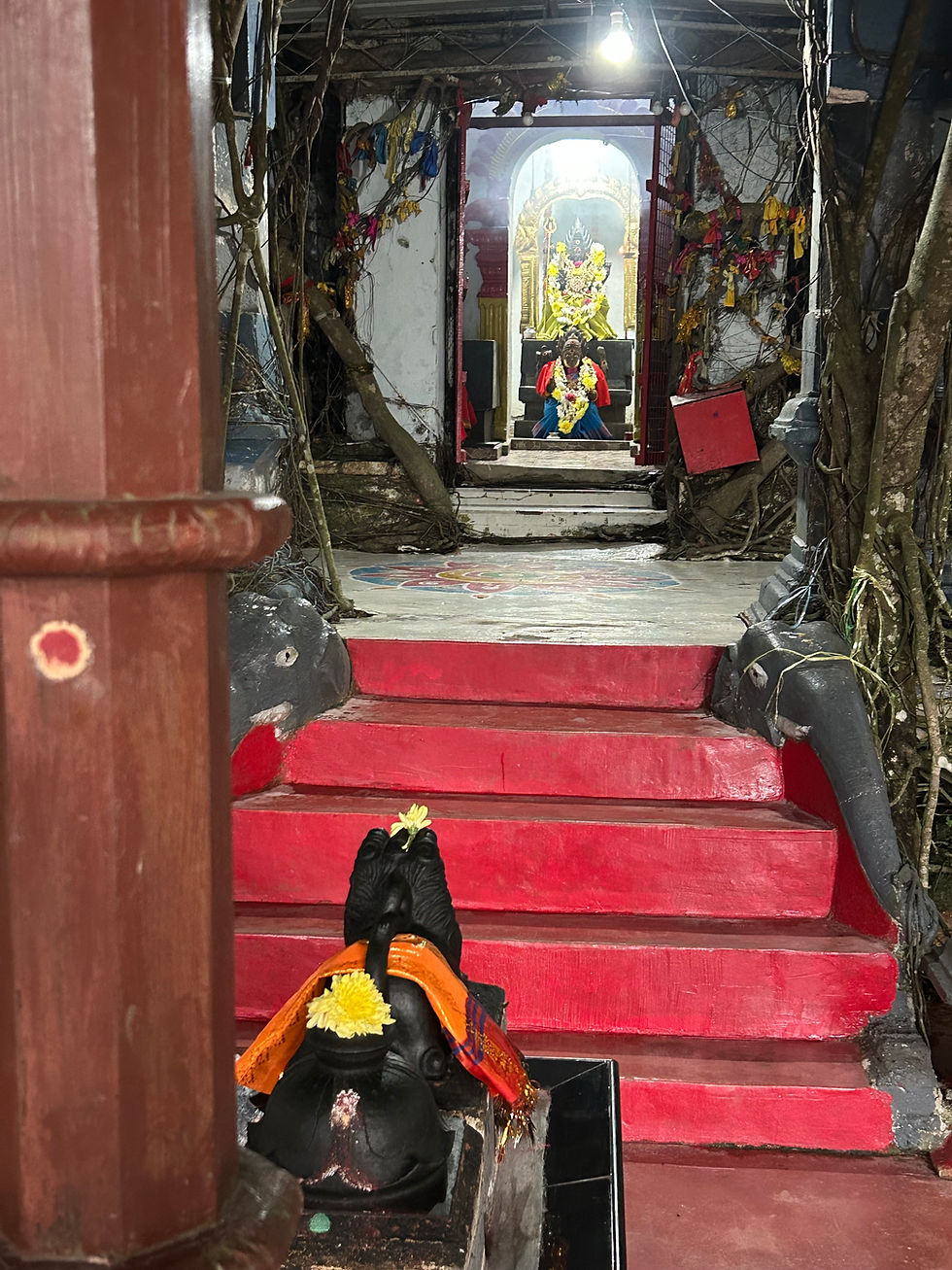
Introduction to Kuladeivam: Carrying More Than Trade Across the Sea
In the previous article, Mount Jerai: Civilization Transmission Series, we explored one of Southeast Asia's most significant maritime landmarks. Rising above the Kedah Plain, Mount Jerai guided merchants, pilgrims, and seafarers navigating the Bay of Bengal. For centuries, it stood as a beacon linking South India with the Malay Peninsula, reminding us that the movement of people has always been accompanied by the movement of ideas, beliefs, languages, and culture.
Yet those who crossed the sea carried something even more enduring than trade goods.
They carried memory.
Long before passports, nation-states, and modern borders, Tamil communities preserved their identity through relationships with land, ancestors, and sacred places. Among the most enduring expressions of this relationship is the tradition of Kuladeivam (குலதெய்வம்), the ancestral or clan deity who accompanies a family across generations.
For many Tamil families, a Kuladeivam is far more than a religious figure. It is a marker of lineage, a guardian of the ancestral village, and a reminder that identity is rooted not only in where we live today, but also in where our families began.
As Tamil communities migrated from village to village, across kingdoms, and eventually across the Bay of Bengal to Malaya, they carried these traditions with them. Shrines were rebuilt, rituals adapted, and ancestral memories preserved in unfamiliar landscapes.
This article explores Kuladeivam not simply as an object of worship, but as a living archive of Tamil civilization.
What Is a Kuladeivam?
The Tamil word Kuladeivam combines two words:
Kula – clan, lineage, or extended family
Deivam – deity or divine protector
A Kuladeivam is therefore the ancestral deity traditionally worshipped by successive generations of the same family.
Unlike an Ishta Devata, a deity chosen through personal devotion, a Kuladeivam is inherited. One is born into this relationship. It forms part of a family's collective identity and is often associated with a specific village, temple, or sacred landscape.
Historically, Tamil families returned to their Kuladeivam temple once a year and before significant milestones such as marriages, childbirth, house construction, or major life transitions. These visits reaffirmed a connection not only with the divine but also with ancestors, kinship networks, and place.
In this sense, the Kuladeivam tradition preserved more than faith. It preserved memory.
The Historical Evolution of Tamil Folk Religion
The origins of Tamil folk religion extend far beyond the construction of monumental temples. Before the rise of the great Chola, Pandya, and Pallava temple complexes, communities across ancient Tamilakam expressed spirituality through sacred groves, hills, rivers, hero stones, ancestral memorials, and village guardian shrines.
These traditions emerged from a combination of ancestor veneration, nature worship, and the commemoration of individuals who had sacrificed themselves for their communities. Over time, these practices evolved into the worship of guardian deities who protected villages, fields, forests, and families.
Unlike formal temple traditions governed by Agamic rituals, village worship often remained local and community-led. Rituals reflected the rhythms of agricultural life, seasonal cycles, and the lived experiences of ordinary people.
This distinction should not be understood as a hierarchy. Rather, it illustrates the diversity of Tamil religious life, where village traditions and temple traditions coexisted, influenced one another, and evolved over centuries.
Today, many village deities continue to be worshipped alongside pan-Indian Hindu deities, demonstrating the remarkable continuity of these ancient traditions.
Archaeological and Epigraphic Clues to Ancestral Memory
The archaeological record provides important clues about the deep antiquity of ancestor remembrance and local ritual practices in South India.
Megalithic burial sites discovered across Tamil Nadu, including at Adichanallur, Kodumanal, and Porunthal, reveal communities that placed considerable importance on commemorating the dead through carefully constructed burial monuments and ritual objects. These findings suggest that remembrance of ancestors was an integral part of social life long before the emergence of later temple traditions.
Equally significant are the Nadukal, or hero stones, erected in memory of individuals who died protecting cattle, defending settlements, or displaying exceptional bravery. Sangam literature describes the raising of these memorial stones, and archaeological discoveries demonstrate that the practice continued for centuries. Hero stones served not merely as monuments but as places where the memory of the deceased remained active within the community.
Excavations at Keeladi have further expanded our understanding of early urban society in Tamilakam, revealing literacy, craft production, and complex settlement patterns dating to the Early Historic period. Keeladi reinforces the picture of a sophisticated society in which local traditions, family structures, and cultural practices were already well established.
Village guardian shrines, terracotta horses associated with Ayyanar worship, and sacred boundary markers found across Tamil Nadu provide additional evidence of enduring local ritual landscapes.
Archaeology evidence suggests a remarkable continuity in the importance of ancestors, guardianship, and sacred geography within Tamil civilization.
Sangam Literature and the Sacred Landscape
Ancient Tamil literature offers another window into this worldview.
The Sangam corpus, composed approximately two thousand years ago, presents a society in which landscapes, emotions, livelihoods, and spirituality were inseparable.
The five Tinai landscapes: Kurinji (mountains), Mullai (forests), Marutham (agricultural plains), Neithal (coastal regions), and Palai (arid lands) were not merely geographical classifications. Each landscape carried its own social customs, poetic traditions, ecological relationships, and associated deities.
Works such as the Purananuru describe fallen warriors being honoured through hero stones, preserving their memory within the community. Other Sangam texts reveal a society where hills, forests, rivers, and settlements has spiritual significance, reflecting an intimate relationship between people and place.
Sangam literature presents a cultural landscape in which ancestor remembrance, local guardians, sacred geography, and communal identity were deeply intertwined. These ideas provide an important context for understanding how village deity traditions may have developed and endured.
Village Gods and Goddesses: Guardians of Community
Village deities are often referred to as Kaaval Deivam, guardian deities entrusted with protecting the wellbeing of the community.
Unlike deities whose temples dominate city skylines, these guardians are frequently found at village boundaries, forest edges, crossroads, or sacred groves. Their placement symbolises protection of both physical and spiritual boundaries.
Among the best-known are:
Karuppasamy
A guardian associated with justice, truth, and protection. Karuppasamy is widely revered as an uncompromising defender of moral order, often depicted carrying weapons and standing vigilant at the edge of the village.
Ayyanar
Traditionally worshipped as the protector of villages and agricultural lands, Ayyanar is commonly accompanied by monumental terracotta horses believed to assist in his nightly patrols. His shrines reflect the close relationship between community life, ecology, and sacred responsibility.
Muneeswaran
Widely worshipped in both Tamil Nadu and the Tamil diaspora, particularly in Malaysia, Muneeswaran is often understood as a guardian spirit associated with ancestors, wisdom, and protection. Roadside shrines dedicated to Muneeswaran remain familiar landmarks throughout many Tamil communities.
Mariamman
Revered as a goddess of healing, rain, fertility, and protection, Mariamman occupies a central place in village religious life. Her festivals often emphasise communal resilience and collective wellbeing.
Angalamman
Representing fierce feminine protection and spiritual transformation, Angalamman reflects the enduring role of female guardian deities within Tamil traditions.
Sudalai Madan
Especially prominent in southern Tamil Nadu, Sudalai Madan is associated with cremation grounds and the liminal spaces between life and death, reminding communities that remembrance extends beyond physical existence.
Madurai Veeran
Remembered as both historical hero and guardian figure, Madurai Veeran illustrates how extraordinary human lives can become integrated into sacred memory.
Although each deity holds unique characteristics, together they express recurring themes of justice, courage, healing, fertility, protection, ecological stewardship, and ancestral continuity.
Crossing the Bay of Bengal: Kuladeivam in Malaya
When Tamil labourers migrated to Malaya during the nineteenth and early twentieth centuries, they left behind villages, fields, and ancestral temples.
What they left behind was memory.
Across plantation estates, workers established modest shrines dedicated to Mariamman, Muneeswaran, Karuppasamy, and other village deities. These shrines became places where displaced communities reassembled fragments of their ancestral worlds.
Within unfamiliar landscapes, Kuladeivam worship offered continuity. It preserved kinship, language, ritual, and identity across generations born far from the villages of their ancestors.
Many Malaysian Tamil families today continue to maintain these traditions, even when the precise location of their original ancestral village has faded from living memory. The deity remains as a thread connecting the present to the past.
This continuity demonstrates that migration does not necessarily erase heritage. Rather, heritage adapts, travels, and takes root in new landscapes.
Ancestral Guardians Around the World
Although the Tamil Kuladeivam tradition holds distinctive cultural characteristics, the idea of ancestral guardians is not unique to Tamil civilization.
Across cultures, communities have developed ways of maintaining relationships with those who came before them.
In Japan, Ujigami are guardian deities traditionally associated with particular clans and local communities.
Chinese ancestral halls preserve genealogies and provide spaces where families honour previous generations through ritual remembrance.
In Korea, village guardian traditions known as Seonghwangdang protect settlements and reinforce communal identity.
Among the ancient Romans, household guardian spirits known as Lares and Penates safeguarded family life and domestic continuity.
Across many African societies, ancestors continue to be regarded as active participants in the wellbeing of the community.
These examples differ in practice, yet they reveal a shared human impulse: the desire to remember where we come from and to maintain relationships across generations.
Kuladeivam as a Living Archive of Civilizational Memory and Ancestral Identity
Modern societies often think of archives as libraries, museums, or written documents.
Yet civilizations also preserve knowledge through living traditions.
Kuladeivam represents one such archive.
Within the worship of an ancestral deity are encoded stories of migration, family lineage, village geography, ecological relationships, seasonal rituals, ethical values, and communal memory. Every pilgrimage to an ancestral shrine, every family story about the deity, and every ritual passed from one generation to the next contributes to the preservation of cultural knowledge.
For families whose written genealogies have been lost, these traditions often remain among the last living connections to ancestral identity.
This perspective invites us to view Kuladeivam not simply as an element of religion, but as an enduring civilizational institution that has helped Tamil communities remember who they are across centuries of political change, migration, and social transformation.
Conclusion: Remembering Beyond Memory
The story of Mount Jerai reminds us that landscapes remember the movements of people.
The story of Kuladeivam reminds us that people remember through their relationships with land, ancestors, and community.
Together, they reveal that civilization is not built solely from monuments or inscriptions. It is sustained through practices that continue to give meaning to identity across generations.
As we revisit the civilizations of the past, it may be worth asking not only what survives in stone, but also what survives in living memory.
The most enduring archive of all is not the one carved into rock, but the one carried quietly within families, remembered in a pilgrimage, a village shrine, or the name of a guardian deity spoken across generations.


Comments